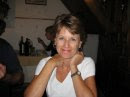
Yesterday we tried a new bistro style restaurant in San Carlos called Locana Positano on Laurel St. We know the owner, Enzo, from his wonderful restaurant in San Mateo called AcquaPazza. Fabulous, well his new bistro is also fabulous! We shared a crispy thin crusted pizza with a scoop of luscious mozzarella, arugula, and super thin sliced prosciutto in the center. Wonderful! Because it happened to be Mother's Day we were treated to a sweet citrus/cinnamon ricotta stuffed pastry. I can't wait to go back there for dinner!
Monday, May 9, 2011


Tuesday, May 3, 2011
Meatballs
Here is a new meatloaf/meatball recipe that was my favorite so far. My substitutes are in parenthesis. I like making the meatballs because I can freeze what we do not use for another dish.
Ingredients
- 1/3 cup milk
- 1 slice bread, crust removed (1 1/2-inch)
- 1 pound ground pork(omitted, I used beef)
- 1 pound ground veal or beef(I used all beef)
- 1/3 pound mortadella, minced
- 1 small onion, finely chopped (about 1/2 cup)
- 1/2 cup chopped fresh flat-leaf parsley
- 1/2 cup grated Parmesan cheese
- 1/4 cup pistachio nuts, chopped
- 2 cloves garlic, minced
- 2 large eggs, lightly beaten
- 2 tablespoons white or red wine(optional)
- 1/2 teaspoon coarse salt
- 1/4 teaspoon freshly ground black pepper
Directions
- Preheat the oven to 400 degree Fahrenheit.
- Heat the milk in a small pan until warm but not scalded. Turn off the heat. Place the bread in the milk and let sit to absorb the milk, turning once, about 1 minute per side. Remove the bread to a board, finely chop it, and place the bread in a large bowl.
- (I chopped all the ingredients, except the beef, in a Cuisinart then added to the beef in a large bowl.)
- Add the pork, veal, mortadella, onion, parsley, cheese, nuts, garlic, eggs, wine, salt, and pepper to the bread. Using your hand, mix to combine completely. Form into an oval-shaped loaf and place in a large baking dish. Cook for 55 minutes. Let rest 10 minutes before serving.
- (I made large meatballs and baked for 20 minutes at 350 degrees.)

© 2011 Martha Stewart Living Omnimedia. All rights reserved.
Monday, May 2, 2011
Back Pain?
We all have back pain on occasion and when I saw this article I thought it was worth sharing. I plan to check into this method.
( Berkeley Wellness)
Chronic back pain is often hard to treat. But rather than sit it out, you might want to try movement training, such as the Alexander Technique.
At one time or another, almost everybody has low back pain. It’s a major cause of missed work and disability. Though injuries and overexertion can cause it, many people have no idea how they injured their backs. Often MRIs and other imaging tools reveal no abnormalities in painful backs, while images of painless backs may show abnormalities. In about 10 to 20% of people with low back pain, the condition becomes chronic. This limits work, play, family life, and exercise.
Many people think that the best cure is bed rest or just sitting still, but this is not true. Study after study has shown that bed rest is the worst thing for low back pain, and that exercise can help. Indeed, studies show that exercise is one of the few clearly effective treatments in the long run.
New plan found to help
It’s encouraging news that a team of researchers in England, as reported in BMJ, came up with a promising plan. Their well-designed clinical trial included 579 people (aged 18 to 65) with chronic or recurrent low back pain, all otherwise healthy. Several approaches were combined and compared: therapeutic massage administered in six sessions, an exercise program (brisk walking), and lessons in the Alexander Technique. This is a method of improving posture and reducing muscle tension, among other things, and requires formal training.
The outcome was pretty clear: those who learned the Alexander Technique (with or without the exercise program) experienced the greatest and longest-lasting improvements in physical functioning, as well as the most pain-free days. Massage, as well as exercise by itself, provided smaller, shorter benefits. People who had six lessons in the Alexander Technique and followed the exercise program did as well as those who had 24 lessons and no exercise.
The Alexander Technique is not the only such approach—Feldenkrais, McKenzie, and Pilates are other types of movement training that show promise—but this is the best evidence so far about any movement therapy and back pain.
So what is the Alexander Technique?
Developed over a century ago by F. Matthias Alexander, the technique is neither massage nor exercise, nor physical therapy, but individualized training to improve posture, muscle tone, and movement. A teacher observes you carefully in each session, advising you on ways to move, sit, and stand efficiently, without undue strain. Alexander originally intended the technique for singers and actors needing to reduce vocal tension. Over the years it has been adapted as a treatment for various kinds of musculoskeletal pain.
What you can do: If you have chronic or recurring back-pain, brisk walking for 30 minutes five times weekly (as in the study) is a good idea for many reasons, and you don’t need a trainer. Massage is also worth trying. Lessons in the Alexander Technique may run to $100 a session—not always covered by insurance. Some physical therapists are certified in the Alexander Technique, and a referral from your physician may mean that insurance would cover the lessons. The American Society for the Alexander Technique can refer you to a certified teacher in your area.
( Berkeley Wellness)
Chronic back pain is often hard to treat. But rather than sit it out, you might want to try movement training, such as the Alexander Technique.
At one time or another, almost everybody has low back pain. It’s a major cause of missed work and disability. Though injuries and overexertion can cause it, many people have no idea how they injured their backs. Often MRIs and other imaging tools reveal no abnormalities in painful backs, while images of painless backs may show abnormalities. In about 10 to 20% of people with low back pain, the condition becomes chronic. This limits work, play, family life, and exercise.
Many people think that the best cure is bed rest or just sitting still, but this is not true. Study after study has shown that bed rest is the worst thing for low back pain, and that exercise can help. Indeed, studies show that exercise is one of the few clearly effective treatments in the long run.
New plan found to help
It’s encouraging news that a team of researchers in England, as reported in BMJ, came up with a promising plan. Their well-designed clinical trial included 579 people (aged 18 to 65) with chronic or recurrent low back pain, all otherwise healthy. Several approaches were combined and compared: therapeutic massage administered in six sessions, an exercise program (brisk walking), and lessons in the Alexander Technique. This is a method of improving posture and reducing muscle tension, among other things, and requires formal training.
The outcome was pretty clear: those who learned the Alexander Technique (with or without the exercise program) experienced the greatest and longest-lasting improvements in physical functioning, as well as the most pain-free days. Massage, as well as exercise by itself, provided smaller, shorter benefits. People who had six lessons in the Alexander Technique and followed the exercise program did as well as those who had 24 lessons and no exercise.
The Alexander Technique is not the only such approach—Feldenkrais, McKenzie, and Pilates are other types of movement training that show promise—but this is the best evidence so far about any movement therapy and back pain.
So what is the Alexander Technique?
Developed over a century ago by F. Matthias Alexander, the technique is neither massage nor exercise, nor physical therapy, but individualized training to improve posture, muscle tone, and movement. A teacher observes you carefully in each session, advising you on ways to move, sit, and stand efficiently, without undue strain. Alexander originally intended the technique for singers and actors needing to reduce vocal tension. Over the years it has been adapted as a treatment for various kinds of musculoskeletal pain.
What you can do: If you have chronic or recurring back-pain, brisk walking for 30 minutes five times weekly (as in the study) is a good idea for many reasons, and you don’t need a trainer. Massage is also worth trying. Lessons in the Alexander Technique may run to $100 a session—not always covered by insurance. Some physical therapists are certified in the Alexander Technique, and a referral from your physician may mean that insurance would cover the lessons. The American Society for the Alexander Technique can refer you to a certified teacher in your area.
Sunday, April 24, 2011
Godfathers Restaurant
Last night we tried a local restaurant "Godfathers" known for their hamburgers. Good thing we made a reservation as it was very crowded, which is a good sign. My husband had the traditional cheeseburger with fries and I had the grilled chicken topped with deep fried onion straws, served with cinnamon seasoned sweet potato fries. Both had all the trimmings, lettuce, tomato, pickles, onion, and their yummy tartar-dill sauce. Delicious! We both agreed that is was one of the best we have had so far. Also note that the meats are all organic.
Every now and then one has to splurge!


Every now and then one has to splurge!


Wednesday, April 20, 2011
Healthy Tidbit
This might be worth looking into with your doctor...
(Berkeley Wellness)
Flavocoxid: A “Medical Food” for Arthritis?
Flavocoxid (brand name Limbrel) is sold as a treatment for osteoarthritis. It’s an unusual product, but there’s reason to think it might help.In a sense, flavocoxid is a dietary supplement. But it’s actually classified as a “medical food”—and you need a doctor’s prescription to get it.
Flavocoxid is a combination of flavonoids, a large group of plant chemicals that act as pigments and have other functions for plants and probably for humans who eat the plants. Flavonoids are plentiful in fruits, vegetables, red wine, and green tea, for example.
Like aspirin and other NSAIDs (nonsteroidal anti-inflammatory drugs), flavonoids have anti-inflammatory effects and thus may help reduce arthritis pain. But you cannot consume enough from foods to get a significant effect. The flavonoids in flavocoxid come from non-edible plants, Scutellaria baicalensis (also called Chinese skullcap) and Acacia catechu.
The action of flavocoxid is similar to that of NSAIDs. It suppresses enzymes that produce pain, but may be less likely to cause the side effects of NSAIDs, notably gastrointestinal bleeding.
Medical foods are not regulated in the same way as prescription drugs—that is, manufacturers are not required to submit research showing effectiveness. Preliminary research on flavocoxid, however, has been promising. Some researchers think it may prove superior to NSAIDs. But some people do report side effects, including stomach problems, and there may be interactions with anti-clotting drugs. And flavocoxid doesn’t work for everybody, according to the latest study, though that’s true of drugs, too.
Still, if you have arthritis and can’t take aspirin or other NSAIDs, you might discuss this medical food with your physician. One problem: not all insurance covers it. And it is expensive—about $4 a day, though discounts are often offered.
Eggs
Here is an interesting egg tidbit to remember since we will be seeing an abundance of colored Easter eggs.
(Berkeley Wellness)
The question being how long do we keep hard boiled eggs? The advice of the USDA is to discard hard boiled eggs after one week. Cooking eggs in water washes away an egg's protective coating, and this leaves tiny pores open in the shell through which bacteria can enter and contaminate the egg. Uncooked fresh eggs last longer because they retain their protective coating-either the natural coating (called the cuticle or the bloom) produced when the hen lays an egg, or a mineral oil that egg producers spray on after the eggs are washed at processing plants. Keep in mind hard boiled eggs should be refrigerated at 40 degrees F or below within two hours of cooking.
This is great advice to remember to refrigerate those fun and brightly colored hard boiled eggs after 2 hours. If they have been out side for the egg hunt or on the table for decoration for many hours, it is probably best to eat right away that day or discard.
Remember the old saying, "when in doubt, throw it out!"
(Berkeley Wellness)
The question being how long do we keep hard boiled eggs? The advice of the USDA is to discard hard boiled eggs after one week. Cooking eggs in water washes away an egg's protective coating, and this leaves tiny pores open in the shell through which bacteria can enter and contaminate the egg. Uncooked fresh eggs last longer because they retain their protective coating-either the natural coating (called the cuticle or the bloom) produced when the hen lays an egg, or a mineral oil that egg producers spray on after the eggs are washed at processing plants. Keep in mind hard boiled eggs should be refrigerated at 40 degrees F or below within two hours of cooking.
This is great advice to remember to refrigerate those fun and brightly colored hard boiled eggs after 2 hours. If they have been out side for the egg hunt or on the table for decoration for many hours, it is probably best to eat right away that day or discard.
Remember the old saying, "when in doubt, throw it out!"
Tuesday, April 19, 2011
Healthy Pizza
Serves:1 serving

Ingredients
- 1 large low -fat, high-fiber, burrito-size tortilla (with about 100 calories)
- Nonstick cooking spray, as needed
- 1/3 cup fat-free ricotta cheese
- 1 tablespoon shredded part-skim mozzarella cheese
- 1/4 cup thinly sliced onion
- 1/4 teaspoon garlic powder
- Salt and freshly ground black pepper
- 4 thin slices plum tomato
- 4 fresh basil leaves, plus more for serving, optional
- Grated Parmesan cheese, for serving, optional
Directions
Preheat the oven to 375 degrees F.Put tortilla on a baking sheet sprayed with nonstick spray. Bake in the oven until slightly crispy, 3 to 5 minutes per side. Leave oven on.
In a small bowl, mix ricotta cheese with mozzarella cheese. Set aside.
Bring a skillet coated with nonstick spray to medium heat on the stove. Add the onion and, stirring occasionally, cook until softened and slightly browned, about 5 or 6 minutes.
Immediately stir onion into cheese mixture. Add garlic powder, 1/8 teaspoon salt, and black pepper, and mix well.
Spread cheese-onion mixture evenly on top of the tortilla. Top with tomato slices and basil leaves, and then sprinkle with a dash of salt, if desired.
Return the pizza to the oven and bake until hot, about 5 minutes. Use a pizza cutter or a sharp knife to cut into slices. Garnish with Parmesan, if using. Pizza for one!
PER SERVING (entire recipe): 200 calories, 3.25g fat, 930mg sodium, 33g carbs, 7g fiber, 7g sugars, 17g protein
Subscribe to:
Posts (Atom)

 Posts
Posts

